Thermal & Surface Engineering · Sheffield

Metal Heat Treatment Sheffield

Heat-treatment coordination for steel components, tooling, repairs and production batches used by Sheffield engineering businesses.

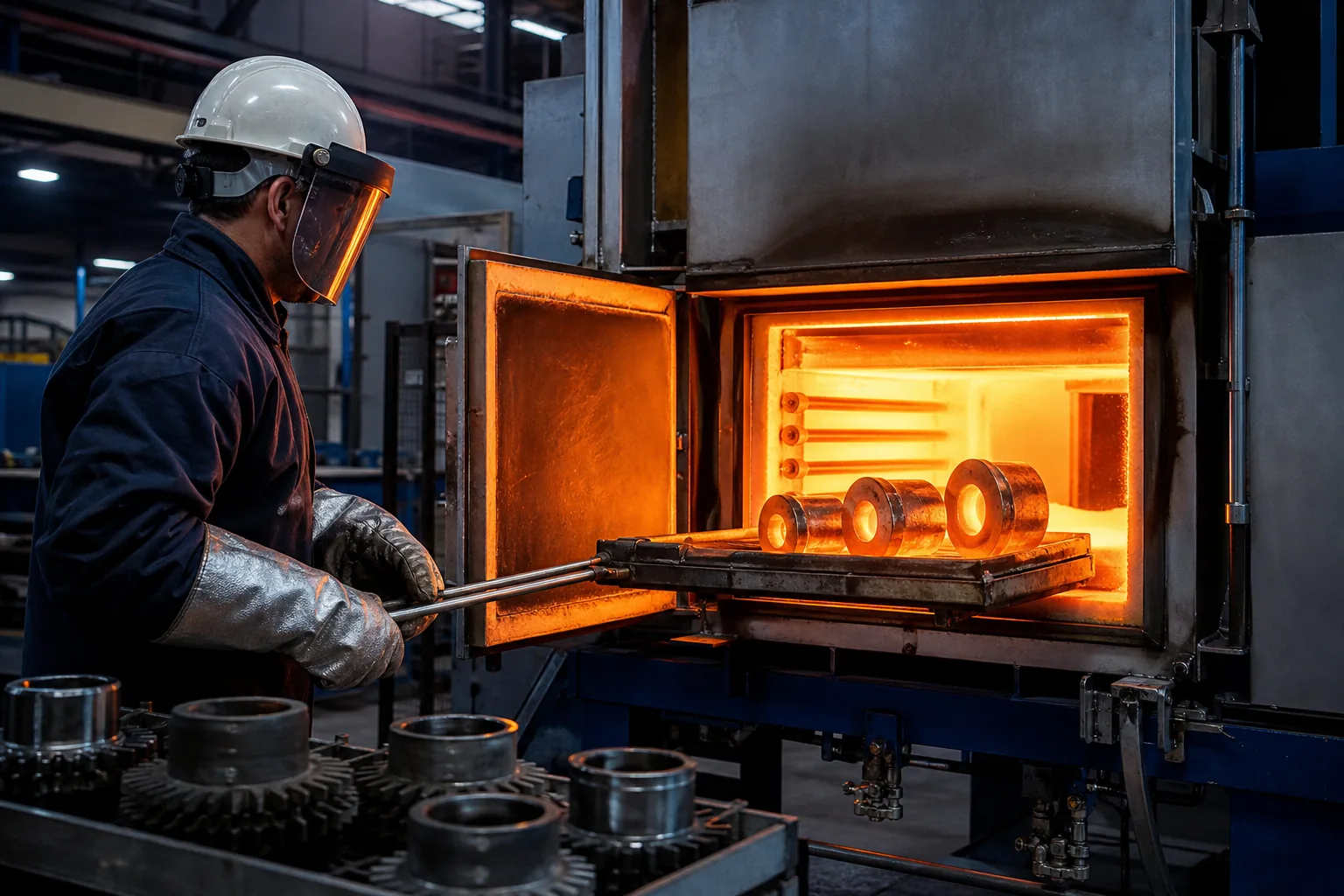
Industrial heat-treatment furnace serving metal components for Sheffield industry

Local B2B service

Metal Heat Treatment services for Sheffield businesses

Heat treatment changes the structure and properties of metal through controlled heating and cooling. Sheffield engineering buyers use it to develop hardness, toughness, wear resistance, machinability, dimensional stability or stress relief in tools and components. Subcontract Engineering Services helps convert a material and performance requirement into a clear subcontract enquiry, including treatment condition, batch quantity, testing and downstream operations.

A treatment name without an alloy or target condition is rarely enough. Hardening and tempering, annealing, normalising, case hardening, nitriding, solution treatment and stress relieving have different limitations and purposes. Material grade, starting condition, section thickness and prior manufacturing history affect the result. The drawing or specification should state hardness range, case depth or mechanical properties where applicable, together with the required standard and test location.

Dimensional change is another practical concern. Machining allowance, sharp section transitions, residual stress, blind holes and asymmetric geometry can influence movement during treatment. For Sheffield customers, planning heat treatment with machining and finishing allows critical dimensions to be allocated before and after treatment sensibly, rather than assuming the component will remain perfectly unchanged.

What the service can cover

  • Review of hardening, tempering, annealing, normalising and stress-relief enquiries.
  • Case-hardening and surface-hardening requirements considered to customer specification.
  • Components, tooling, repair parts, prototypes and production batches.
  • Hardness, case depth, testing and certification requirements captured at quotation.
  • Coordination with machining, forging, welding, coating and finishing processes.
  • Commercial support for Sheffield manufacturers and South Yorkshire engineering teams.

Technical points to define before ordering

Specifying the required condition

The purchase specification should identify the material grade, initial condition, heat-treatment process, target hardness or properties, permissible range and test method. Case treatments also need effective or total case depth definitions and surface hardness. If a drawing cites a standard, include the revision and any customer-specific deviations. Ambiguous language such as “harden fully” should be replaced with measurable acceptance criteria.

Design and dimensional considerations

Heat treatment can reveal residual stress or create thermal and transformational movement. Uniform sections and generous transitions generally behave more predictably than abrupt heavy-to-thin changes. Holes, threads and finished faces may need allowance or protection. Identify dimensions requiring correction or finish grinding after treatment and state whether straightening is allowed. This is especially important for long shafts, thin plates and precision tooling.

Testing, records and batch control

Hardness checks can be local or representative, while case depth and microstructure may require test coupons or destructive sections. Material certificates, furnace charts, certificates of conformity and test reports should be specified before processing. Separate material heats and drawing revisions clearly. For repeat Sheffield production, an agreed batch and identification method helps protect traceability and reduces uncertainty when components return from treatment.

Typical metal heat treatment applications

The following examples show the kind of commercial requirement that may be discussed. They are not a guarantee that every size, material, certification or deadline is available; the actual job is confirmed after technical review.

  • gears, shafts and wear parts.
  • dies, tools and fixtures.
  • machined alloy-steel components.
  • forgings and fabricated assemblies.
  • repair and replacement components.
  • stress relief before finish machining.
Local project support

Serving Sheffield’s engineering and industrial economy

Sheffield has a strong concentration of engineering, advanced manufacturing, metalworking, construction and maintenance activity. This page is written for real procurement needs across the city, including the Lower Don Valley, Attercliffe, Darnall, Tinsley, Handsworth, Meadowhall, Hillsborough, Ecclesfield and Chapeltown. Enquiries from nearby Rotherham, Barnsley, Doncaster, Chesterfield and Worksop can also be considered.

Local relevance does not mean adding place names to otherwise generic text. A useful Sheffield metal heat treatment page should answer how a buyer starts, what information influences cost, where other processes connect and which requirements need confirmation. That is why the content focuses on drawings, materials, quantities, inspection, site conditions and delivery rather than promising an instant universal solution.

Being clear about location matters commercially. Include the delivery or work-site postcode, unloading arrangements, available hours and required date. For site work, add parking, security, induction, welfare, access equipment, permits and production restrictions. For manufactured parts, state whether collection, dedicated delivery, protective packaging or timed receipt is needed.

A clear route

From enquiry to delivery

  1. Send the requirement. Share the current drawing revision, quantities, materials, finish, quality needs and target date.
  2. Confirm the scope. Questions, exclusions, responsibilities and any related processes are identified before commitment.
  3. Agree the quotation. Check price, lead time, delivery, documentation and the exact technical basis of the offer.
  4. Control changes. Approve drawing or schedule changes in writing so the delivered work matches the latest requirement.

Better quotations

Information to send for a metal heat treatment quote

A clear enquiry saves repeated emails and makes quotations easier to compare. It also reduces the risk of a low initial price being based on missing operations. Include these points wherever they apply:

  • component drawing and material certificate.
  • starting condition and previous operations.
  • required process, hardness or properties.
  • case depth and test method where relevant.
  • quantity, maximum batch and repeat schedule.
  • distortion, masking, certification and delivery.

Drawings and revision control

Use a dimensioned PDF as the controlled visual record and include a suitable CAD format where digital geometry is useful. Put the drawing number and revision in the email or request schedule. If several files conflict, state which one governs. Mark dimensions that affect fit, safety, sealing, alignment or interchangeability rather than relying on a blanket request for the tightest possible tolerance.

Quality and documentation

List material certification, traceability, inspection, testing, photographs, certificates of conformity or other records before the quote is accepted. Evidence often needs to be created during manufacture and cannot reliably be reconstructed afterwards. Requirements should be proportionate to the part’s function and any applicable customer or industry standard.

Lead time and commercial detail

State the quantity required now, expected repeat demand and the date parts or labour are genuinely needed in Sheffield. Lead time starts from a technically complete order, approved drawings and agreed material availability—not from an early conversation containing unresolved details. Include company name, purchasing contact, delivery address and any supplier onboarding process that could affect the start.

Helpful answers

Metal Heat Treatment Sheffield FAQs

These answers explain the usual starting point. Final capability, compliance, price and lead time are confirmed for the individual enquiry.

Which heat treatments can be considered?

Enquiries can cover hardening and tempering, annealing, normalising, stress relieving, case hardening, nitriding and related routes, subject to material and specification review.

Will heat treatment change dimensions?

Some movement or scale can occur depending on material, geometry and process. Identify critical dimensions and plan machining or grinding allowance where necessary.

Can you test hardness after treatment?

Hardness and other test requirements can be included when the method, locations, acceptance range and reporting needs are specified in advance.

Can treatment be combined with machining?

Yes. The sequence, stock allowance and dimensions applying before or after treatment should be established from the final drawing.

Is this service aimed at Sheffield companies?

Yes, it is written for engineering and manufacturing enquiries from Sheffield and nearby South Yorkshire, while wider UK projects can also be considered.

Related services

Processes that may support this project

Send the finished requirement if your job needs more than one operation. It is easier to plan allowances, datums and finishes before the first process begins.

Sheffield B2B enquiries

Discuss your metal heat treatment requirement

Call 07864 286692 or email info@subcontractengineeringservices.co.uk with the drawing, quantity, material, finish, postcode and required date.