Local B2B service
Powder Coating services for Sheffield businesses
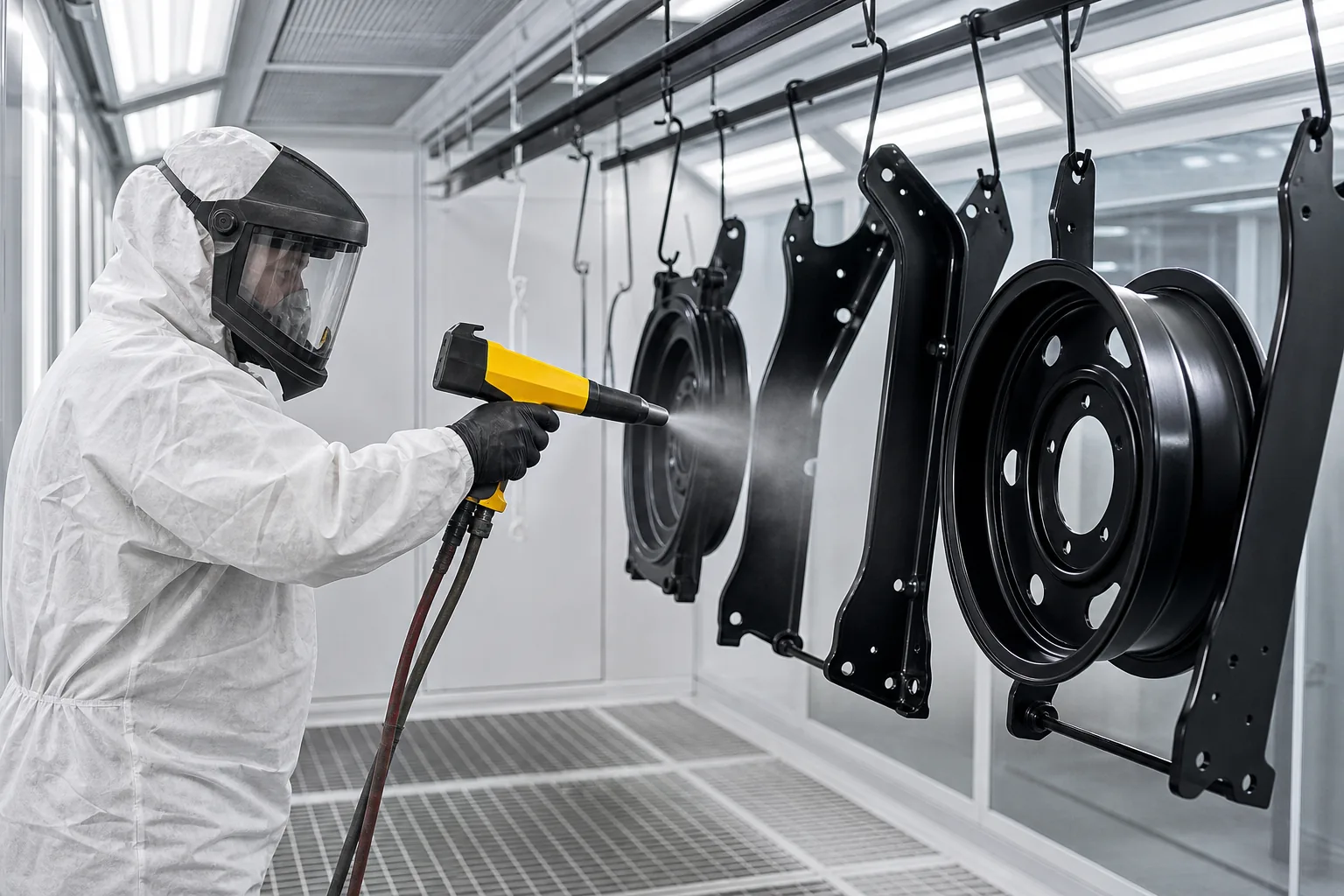
Powder coating provides a durable decorative and protective finish for suitable metal parts. Sheffield manufacturers, fabricators, contractors and facilities teams use it for frames, panels, brackets, guards, enclosures and repeat products. Subcontract Engineering Services helps buyers define the finish alongside the component, so colour, texture, preparation, masking, quantity and delivery are considered before work begins.
A RAL number is a useful colour reference, but it does not describe the entire coating. Gloss level, texture, film build, primer, exterior exposure, chemical environment and substrate condition can all influence performance and appearance. Different batches or powder manufacturers can show slight variation, and lighting affects perception. Where appearance is critical, a physical approved sample and clear visible-face definition provide a stronger reference than a screen image.
Good coating begins with suitable design and preparation. Oil, scale, rust, laser oxide, sharp edges, weld spatter and sealed pockets may affect the finish. Drainage and hanging points need attention, while threads, bearing fits, earth points and mating faces often require masking. Sheffield customers can reduce delays by showing these areas on drawings and discussing the coating before the fabrication is completed.
What the service can cover
- Powder coating enquiries for sheet-metal parts, frames, guards, panels and fabrications.
- Colour, gloss, texture and environmental duty captured as part of the specification.
- Preparation, masking, plugging, hanging and packaging considered before processing.
- One-off fabrications, project batches and repeat production quantities.
- Coordination with laser cutting, sheet-metal work, welding and steel fabrication.
- Commercial service discussions for Sheffield and South Yorkshire customers.
Technical points to define before ordering
Preparing components for coating
Coating quality depends on the substrate and pretreatment. The required route varies with material, contamination, corrosion and service environment. Fabrications should be free from silicone, heavy oil, weld spatter and inaccessible debris. Sharp edges may receive less effective coverage, while overlapping seams can release trapped contamination during curing. Discuss these features before fabrication where possible.
Masking, threads and fit
Powder adds thickness and can bridge small gaps. Threads, precision bores, hinge interfaces, electrical contacts, earthing points and areas for later welding may need masking or plugging. Drawings should locate every protected feature and state whether masking boundaries are cosmetic. Components assembled after coating require enough clearance to accommodate coating on both mating surfaces.
Colour and acceptance
Define colour with an agreed standard such as a RAL reference, then add gloss, texture and finish system. State which faces are cosmetic and the viewing conditions or sample that governs acceptance if appearance is important. For outdoor or corrosive duty, provide the environment and design life so pretreatment and primer requirements can be reviewed. Packaging should prevent coated faces rubbing during transport.
Typical powder coating applications
The following examples show the kind of commercial requirement that may be discussed. They are not a guarantee that every size, material, certification or deadline is available; the actual job is confirmed after technical review.
- machine frames and guards.
- control panels and enclosures.
- brackets and formed components.
- retail or workplace metalwork.
- indoor and exterior fabrications.
- repeat manufactured products.